
Dicero
HabbyCasual
4.4535.00 Reviews
- Version
- 1.7.2
- Installs
- 1.00M
- Age Rating
- Everyone 10+
Screenshots


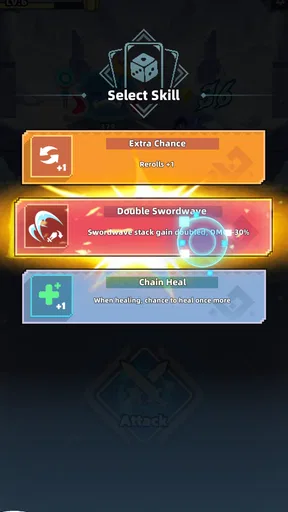



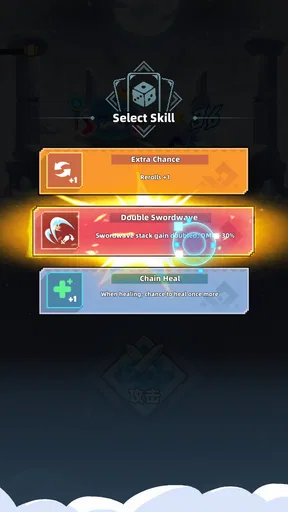

Our Review of Dicero
 Analysis by Appyee
Dicero is a casual game from Habby that I found easy to understand at first glance but more interesting once I started paying attention to how each roll shaped the next decision. Its basic appeal is immediate: you roll, make choices around your build, and work toward upgrades that can change how a run feels. That simplicity makes it suitable for short sessions, yet the build decisions give it more thought than a purely disposable time-killer.
I approached it as the kind of game I might open while waiting for an appointment or taking a short break, rather than something intended to replace a large role-playing game. That distinction matters. Dicero works best when you want a compact loop with a little planning, not a long story, a deep social system, or a highly demanding action challenge. The store summary describes it as easy to play, but in my experience the accessible opening hides a gradual need to choose upgrades carefully.
How the game presents its choices
The first strength is readability. The central idea is clear enough that I did not need a long explanation before understanding what I was trying to do. Rolling provides the immediate action, while the build and upgrade choices give the result meaning. I could quickly identify the main interaction and then spend more time considering whether a tempting improvement would actually help the direction I had already taken.
That makes the game approachable for people who do not normally play complex strategy titles. You are not asked to learn a large control scheme before enjoying the first session. The casual format also helps when attention is divided, although I would not describe every decision as mindless. Once several possible improvements begin competing for attention, rushing can leave a build that feels unfocused.
The useful skill is not simply rolling well; it is recognizing when a small upgrade supports the whole build better than a flashy isolated improvement. That is the first practical lesson I took from Dicero. I found it more satisfying when I paused briefly to consider the direction of a run instead of selecting the most impressive-looking option automatically.
For readability, the game benefits from its limited premise. There is less conceptual baggage than in a traditional role-playing game with inventories, quests, character classes, and multiple currencies to track. A player who prefers a clean objective can settle into the loop quickly. On the other hand, anyone who needs extensive explanation for every choice may find the simplicity slightly deceptive, because the game does not turn every strategic consequence into a long tutorial.
I also think the visual clarity will depend on the device and the player. On a normal phone screen, compact game information can become tiring if you are trying to inspect several options quickly. I would recommend playing with the display at a comfortable brightness and avoiding a rushed selection when the screen feels crowded. This is not a complaint about a specific control failure; it is a reminder that a choice-driven game still asks you to read and compare information.
Learning the build loop without overthinking it
My preferred way to start was to treat the first few sessions as observation rather than optimization. I watched how a roll affected my available direction, noticed which upgrades seemed to reinforce one another, and resisted the urge to judge the entire game from one good or bad result. That approach is especially helpful for new players who might otherwise assume that every disappointing roll means they have played incorrectly.
A practical routine is to decide on a broad priority before selecting upgrades. For example, I might favor consistency over a high-risk improvement, or choose an option that makes the next decisions easier to evaluate. This does not require detailed spreadsheets or a guide. It simply prevents the common casual-game habit of tapping the brightest reward without considering what it contributes to the current run.
That workflow also improves access for players who process information more comfortably when choices are reduced to a clear personal rule. Someone who becomes overwhelmed by several competing possibilities can use a simple filter: choose the option that strengthens the current direction, and only change course when the alternatives are clearly better. Dicero does not need to be played at maximum speed, so allowing an extra moment for comparison is worthwhile.
Touch controls and different motor demands
Dicero is built around straightforward interaction rather than a complicated action-control layout. That is a positive for players who prefer taps over rapid movement, virtual joysticks, or long combinations of buttons. I found the basic interaction less physically demanding than an action game because the main challenge comes from selecting and evaluating rather than constantly steering a character.
Still, “easy to play” should not be confused with effortless for everyone. A player with limited precision, hand tremors, joint pain, or fatigue may find repeated tapping and small on-screen choices uncomfortable. The game’s suitability will depend on how much space the individual device provides and how forgiving the interface feels in practice. I would test it during a short session first rather than assuming that a simple control concept removes every motor barrier.
There is also a difference between low motor complexity and low cognitive load. Dicero may be physically calmer than many casual action games, but its upgrade choices can still demand attention. For someone who wants a game that can be played almost entirely on autopilot, a very simple matching or idle title may be a better fit. For someone who dislikes fast reflexes but enjoys deciding between improvements, this game offers a more comfortable middle ground.
Sensory comfort is similarly personal. I would be cautious about playing for long stretches if the screen, motion, or repeated visual changes become tiring. The game’s core idea does not require a player to stare continuously at a fast-moving scene, which is helpful for people who need a calmer pace, but that does not guarantee comfort for every sensitivity. Short sessions, a stable viewing position, and ordinary device-level display adjustments can make a meaningful difference.
Playing in ordinary interruptions
The strongest everyday use case is a fragmented break. I can imagine opening Dicero while waiting for transportation, sitting in a reception area, or taking a few minutes between tasks. The roll-and-upgrade structure gives each moment a clear purpose, and I do not need to commit to a long narrative before the game becomes enjoyable. That makes it more practical than a story-heavy game when I know I may need to stop without warning.
At the same time, I would not recommend treating every pause as a safe time to play. If you are walking, crossing a street, supervising a child, or working in a situation that demands immediate attention, the decision-making loop is not a reason to divide your focus. The game is convenient for waiting, not for unsafe multitasking.
It also suits players who share a room or prefer not to use sound as part of the experience. The core appeal comes from the visible roll and the decisions that follow, rather than from needing a complex audio presentation to understand the objective. I would still judge the final comfort on your own device and settings, but the basic design feels more compatible with quiet environments than a game that depends on constant audio cues.
For travel or unreliable connectivity, I would avoid making assumptions about how every part behaves away from a network. The sensible approach is to try the game in the conditions where you expect to use it before relying on it as your only travel entertainment. That small test is more useful than discovering halfway through a journey that a preferred part of the experience is unavailable.
Where it differs from familiar casual games
Compared with a match-three game, Dicero puts less emphasis on arranging a board and more on interpreting the consequences of a roll. That can feel refreshing if you are tired of searching for patterns under time pressure. Compared with an idle game, it asks for more active judgment because the player’s choices matter during the run instead of merely waiting for progress to accumulate.
It is also less reflex-driven than an endless runner. You are not primarily testing reaction time or memorizing a stream of obstacles. That makes it a better alternative for players who enjoy light strategy but find rapid swiping stressful. However, people who want immediate physical excitement may find the pace too measured, especially if they prefer games where every second produces visible action.
Against a traditional dice-based role-playing game, Dicero feels more focused and less demanding to maintain. There is no need for me to commit to a large fictional world before understanding the appeal. The trade-off is depth: players seeking extensive character development, a broad narrative, or a large collection of systems may outgrow the compact loop. Its strength is concentration, not scale.
The game’s free entry also makes it easy to try without paying upfront. In-app purchases range from $0.99 to $99.99 per item, so I would keep spending boundaries in mind before making any purchase. For me, the right approach is to judge whether the basic loop remains enjoyable without treating paid improvements as necessary. A casual game is easier to recommend when the player decides the budget in advance rather than making small purchases impulsively during a frustrating run.
What may still create friction
The largest limitation is that the same simplicity that makes Dicero approachable can make it feel narrow. If you need a strong story, a large world, or a constantly changing set of activities, this is probably not the right choice. The game centers on rolling and developing a build, so players who dislike repeated loops may experience the structure as repetitive sooner than players who enjoy incremental refinement.
Another possible barrier is decision uncertainty. A beginner may understand what to tap but not immediately know why one upgrade is preferable to another. I would not solve that by chasing every available option. Instead, I would focus on learning one style of build at a time and treating unsuccessful attempts as information. The game becomes less confusing when you compare choices against a clear goal rather than trying to evaluate everything equally.
The age rating of Everyone 10+ places it in a generally approachable space, but that label should not replace a parent’s own judgment about purchases, screen time, and how a particular child responds to games. The presence of optional purchases is especially relevant in a family setting. I would review the device’s purchase controls before handing the game to a younger player, even if the game itself feels casual.
Players with visual, motor, or attention-related needs should also take a personal trial seriously. I can describe the game as less physically demanding than an action title, but I cannot promise that its interface will suit every ability. A person who needs large controls, strong contrast, spoken feedback, or extensive customization may prefer a game that explicitly centers those needs. Dicero is accessible in concept, not automatically accessible in every implementation or context.
There is a further trade-off between portability and concentration. The game is convenient in short breaks, but a small phone screen and a noisy environment can make upgrade comparisons less comfortable. If I were playing in a crowded place, I would wait until I could give the choices proper attention rather than making a careless selection simply to keep the run moving.
Who I would recommend it to
I would recommend Dicero to a player who wants a free casual game with a clear starting point and enough build choice to reward thought. It is particularly suitable for someone moving away from reflex-heavy games, or for a player who likes the idea of dice but does not want the weight of a full tabletop campaign. The game can occupy a short break without demanding that I remember a complicated story or manage a large collection of systems.
I would also suggest it to people who enjoy experimenting. The most rewarding part for me was not simply reaching an upgrade; it was noticing how an early choice changed the value of later options. That creates a small strategic puzzle inside the casual format. Players who like comparing paths and learning from imperfect runs will probably get more from it than players who only want a guaranteed reward every few seconds.
I would steer away from it if your priority is a rich narrative, competitive multiplayer, intense action, or a game that can be enjoyed with almost no decisions. I would also be cautious if you are trying to avoid all in-app purchase prompts or if you are particularly vulnerable to spending during progression. The free download lowers the entry barrier, but it does not remove the need for sensible purchase limits.
Habby has positioned the game as a light experience, and its audience will likely include people who want something easier to pick up than a conventional strategy game. My own recommendation comes with one condition: give it enough time to understand the build choices, but do not force yourself to continue if the repeating loop does not hold your interest. Casual games work only when their rhythm fits the player.
My final view after using it
Dicero is at its best when you want low-pressure play with a small but meaningful layer of planning. I like that the controls do not ask for demanding reflexes and that the main idea can be understood quickly. I also appreciate the way an apparently simple roll becomes more interesting when I consider how an upgrade affects the rest of the build.
Its limits are just as clear. The loop may feel repetitive to players who need constant novelty, and the compact presentation may not satisfy someone looking for a full-scale role-playing experience. The game is also not a universal answer for accessibility: reduced motor complexity helps, but individual comfort with text, touch targets, visual presentation, and decision density still matters.
With a 4.4 average from around 32 thousand ratings and more than a million installs, it has clearly attracted a substantial audience. The current version is 1.7.2, and it is available free for devices running Android 6.0 or later. Those details make it easy to try, but my recommendation rests more on the actual fit: Dicero is a good choice for thoughtful short sessions, especially when you want a calmer alternative to reflex games, while players seeking story, social depth, or completely passive progress should look elsewhere.
For me, the best way to approach it is to play deliberately, set a spending limit before starting, and use the first sessions to learn how different upgrade decisions shape a run. If that small cycle of roll, evaluate, and improve sounds satisfying, Dicero is worth a place in a casual library. If the idea of repeating that cycle already feels restrictive, its easy entry will not change the underlying style.
Verdict
Strengths of Dicero
- Simple interface makes it easy to start using Dicero quickly.
- Useful tools are organized clearly for a smoother user experience.
- Suitable for casual users who want a straightforward app.
- Performance feels responsive on compatible mobile devices.
- Regular use can make everyday tasks more convenient.
Limitations of Dicero
- Some features may require an internet connection to work properly.
- The app may feel limited for users seeking advanced customization.
- Compatibility and performance can vary between Android and iOS devices.
- Certain functions may be less intuitive for first-time users.
- Notifications or background activity could affect battery usage.
Other Releases by Habby
View All


Similar Picks in This Category
View All
My Talking Angela
Outfit7 Limited4.2

My Talking Tom
Outfit7 Limited4.3

Pou
Zakeh4.2

My Talking Tom 2: Pet Game
Outfit7 Limited4.3

Candy Crush Saga
King4.6

Bridge Race
Supersonic Studios LTD4.1
Frequently Asked Questions
What is Dicero and what can I use it for?
Dicero is an application designed to support communication and interaction through its available digital features. Depending on the version and platform, it may help users connect with others, share information, or manage conversations in one place. Before downloading, review the app’s current store description because features, supported services, and availability can vary between Android and iOS versions.
Is Dicero free to download and use?
Dicero may be available as a free download, but some functions could require in-app purchases, subscriptions, or access to premium services. The exact pricing depends on your device, country, and the version listed in the Google Play Store or Apple App Store. Check the payment details, renewal terms, and cancellation policy before confirming any purchase.
Does Dicero require an account or personal information?
Dicero may ask you to create an account before you can use its main features. Registration can involve information such as an email address, phone number, username, or profile details. We recommend reading the privacy policy before signing up, especially if the app requests contacts, location, camera, microphone, or notification permissions that are not essential for your intended use.
Is Dicero safe and suitable for everyone?
The safety of Dicero depends on how you use the app, the people you interact with, and the permissions you grant. Use a strong password, avoid sharing sensitive personal details, and review privacy settings after installation. Parents should also check the app’s age rating and communication features, since content or interactions may not be appropriate for younger users.
What should I do if Dicero does not work correctly?
If Dicero crashes, fails to load, or does not send notifications, first check your internet connection and install any available app updates. Restarting the application or device may also help. If the problem continues, review the app’s permissions, clear its cache on Android, or reinstall it. For account or payment problems, contact Dicero’s official support team through the store listing or in-app help section.
Play our best games!


